

News
-
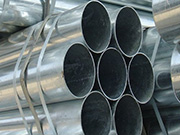
Industrial galvanized steel pipe installation steps
1. Pipe breaking: Draw a line on the selected pipe according to the on-site surveying and mapping sketch, and break the pipe according to the line. a. Use a grinding wheel to sew off the pipe. Place the pipe on the grinding wheel saw caliper, align it with the drawn line, and ...Read more -
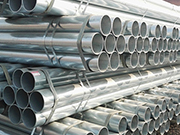
What key points should be paid attention to in the welding process of stainless steel pipes
In the stainless steel pipe welding process, several key points need to be paid attention to. First of all, an understanding of stainless steel materials is essential. Understanding its characteristics, such as thermal conductivity, melting point, expansion coefficient, etc., ...Read more -
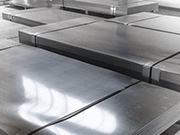
What are the characteristics of galvanized steel sheets
1. Strong corrosion resistance The surface of the galvanized steel plate is coated with a layer of zinc. Zinc has strong corrosion resistance and can effectively prevent the steel from being oxidized, thereby extending the service life of the steel. In addition, the cathodic p...Read more -
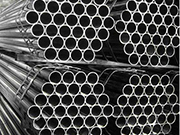
What are the processing technologies for stainless steel pipes
There are many processing technologies for stainless steel pipes, and the appropriate method can be selected according to different needs. Below I will introduce some common. Stainless steel pipe processing technology: 1. Cutting: Cutting is one of the basic steps in stainless...Read more -
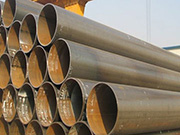
Steel pipe straightening method
In the steel industry, steel pipes, as an important building material, are widely used in bridges, buildings, pipeline transportation, and other fields. However, during the production process, steel pipes often undergo deformation phenomena such as bending and twisting due to ...Read more -
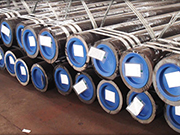
Analysis of the application of high-pressure alloy steel pipes with superior performance
High-pressure alloy steel pipe is a kind of pipe with excellent properties and is widely used in various fields. Among them, high-pressure alloy steel pipes have attracted much attention for their excellent mechanical properties and high-temperature resistance. First, the char...Read more -
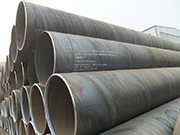
What to do if the spiral welded steel pipe rusts
Rust is a common problem for steel in humid environments, and this is also true for spiral welded steel pipes. Spiral welded steel pipes are widely used in various fields, but if the rust problem is not dealt with in time, its service life and performance will be affected. So,...Read more -
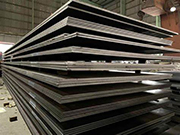
What are the methods for cutting steel plates
There are several methods for cutting steel plates: 1. Flame cutting: Flame cutting is a relatively common steel plate cutting method at present. It uses a high-temperature flame to cut the steel plate into the required shape. The advantages of this method are low cost, high f...Read more -
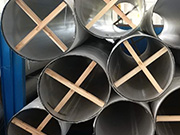
Degreasing Stainless Steel Pipes: The Key to Cleaning and Preventing Corrosion
In the steel industry, stainless steel pipes are widely used in construction, chemical industry, petroleum, electricity, and other fields because of their corrosion resistance, high strength, and elegant appearance. However, stainless steel pipes often need to be degreased dur...Read more